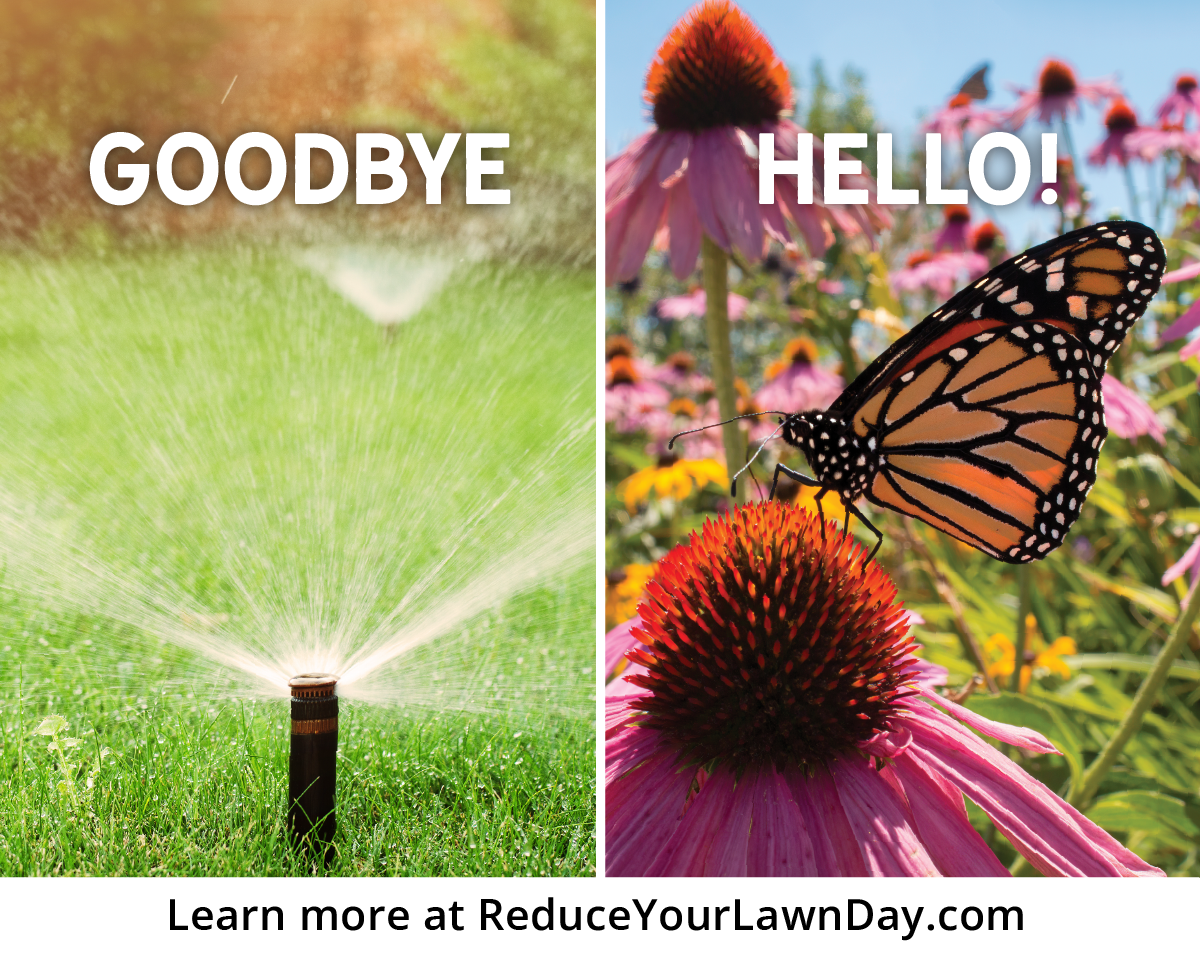
Nearly 20,000 pledges across all 50 states have supported the conversion of traditional turf to pollinator-friendly landscapes and lawn alternatives.
SHELBURNE, VT, UNITED STATES, June 24, 2026 /EINPresswire.com/ — Reduce Your Lawn Day organizers announced today that participants have pledged to transform more than 63.3 million square feet of traditional turf lawns since the movement launched in 2024.
The nearly 20,000 pledges submitted across all 50 states represent more than 1,453 acres committed to pollinator-friendly landscapes, native plant gardens, flowering lawns, perennial landscapes, edible gardens, microclover lawns, groundcovers, and other sustainable lawn alternatives.
Collectively, those pledges represent more than 1,453 acres of land being reimagined as living landscapes that support pollinators, conserve water, increase biodiversity, and reconnect people with nature. Spread out as a five-foot-wide planting strip, that area would stretch along nearly the entire length of historic Route 66 from Chicago to Los Angeles.
Since its launch in 2024, Reduce Your Lawn Day has expanded from an annual awareness campaign into a national movement that helps homeowners explore alternatives to traditional turfgrass landscapes.
FROM AWARENESS DAY TO NATIONAL MOVEMENT
Originally launched by American Meadows and gardening expert Kathy Jentz, author of Groundcover Revolution, Reduce Your Lawn Day was created to raise awareness about lawn-to-garden transformations and provide practical solutions for homeowners interested in more sustainable landscapes.
Over the past three years, the movement has expanded into a coalition of more than 30 partner organizations, educators, authors, designers, advocates, and gardening brands working together to promote sustainable landscaping practices and encourage homeowners to explore alternatives to traditional lawns.
American Meadows, the country’s wildflower experts and a recognized authority in meadowscaping, has helped more than 650,000 customers create pollinator-friendly landscapes, perennial gardens, wildflower meadows, and sustainable lawn alternatives over the past four decades.
“What excites me most isn’t the acreage,” said Tabar Gifford, Master Gardener, Certified Pollinator Steward, and Partnership Cultivator at American Meadows. “It’s the nearly 20,000 pledges from homeowners who’ve decided their landscapes can do more. Every pledge represents someone choosing pollinators, biodiversity, beauty, food production, water conservation, or habitat. Together, those individual choices are creating a meaningful shift in how Americans think about their yards.”
Participants have submitted pledges from all 50 states, demonstrating growing interest in pollinator-friendly landscaping, native plants, lawn alternatives, and sustainable gardening practices nationwide.
The movement’s educational impact was recognized in 2025 with a GardenComm Gold Laurel Media Award honoring its innovative approach to gardening education and environmental stewardship.
WHY REDUCING LAWN STILL MATTERS
While traditional turfgrass remains the nation’s largest irrigated crop, homeowners are increasingly exploring alternatives that can provide ecological benefits while maintaining beauty, functionality, and curb appeal.
According to widely cited estimates:
• More than 40 million acres of lawn exist across the United States
• Turfgrass represents the nation’s largest irrigated crop
• Gas-powered lawn equipment consumes hundreds of millions of gallons of fuel annually
• Pollinator populations and biodiversity continue facing significant challenges nationwide
At the same time, drought conditions, water conservation concerns, and growing interest in sustainable landscaping have encouraged more homeowners to explore alternatives that require fewer resources while supporting local ecosystems.
“For decades, the ideal American landscape was defined by a perfectly maintained lawn,” Gifford said. “Today, people are expanding that definition. They’re discovering that flowering lawns, native plants, perennial gardens, edible landscapes, and pollinator habitats can be just as beautiful while providing meaningful environmental benefits.”
In addition to supporting pollinators and biodiversity, many lawn alternatives can reduce mowing, lower water use, decrease fuel consumption, and create more resilient landscapes that thrive with fewer inputs over time.
POPULAR LAWN ALTERNATIVES
One of the defining principles of the Reduce Your Lawn Day movement is that participation does not require removing an entire lawn. Instead, organizers encourage homeowners to start with manageable changes that fit their goals, lifestyle, and landscape.
Popular alternatives include:
• Native wildflowers
• Pollinator gardens
• Flowering lawns
• Microclover lawns
• Groundcovers
• Perennial gardens
• Edible landscapes
• Habitat gardens
• Waterwise plantings
“Not every yard needs to become a wild meadow,” Gifford said. “The magic of this movement is that it makes environmental action feel approachable. Small changes really do add up. When thousands of people each choose to make room for more pollinators, more biodiversity, and more beauty, the collective impact becomes extraordinary.”
The average pledge submitted through the campaign represents more than 3,100 square feet of landscape transformation, demonstrating that participants are making meaningful changes within their outdoor spaces.
“Reducing the lawn is among the biggest gardening trends today, with more homeowners looking for an eco-friendly and lower-maintenance alternative to a traditional turfgrass lawn,” said Kathy Jentz, gardening expert, author of Groundcover Revolution, and co-founder of Reduce Your Lawn Day. “I am thrilled that so many folks are considering groundcovers and other options for their landscapes.”
LOOKING AHEAD
Organizers said the movement will continue encouraging participation throughout the growing season and into fall, which is considered one of the best times to establish many native perennials, pollinator gardens, and lawn alternative plantings.
“National Pollinator Week is a reminder that meaningful habitat can begin in any yard,” said Gifford. “You don’t need a master plan. You need one corner of your yard and a willingness to try something different.”
Organizers believe the movement’s first three years represent the beginning of a broader shift toward landscapes that are more resilient, productive, and environmentally beneficial.
To learn more about Reduce Your Lawn Day and explore lawn alternatives, visit www.reduceyourlawnday.com.
ABOUT REDUCE YOUR LAWN DAY
Reduce Your Lawn Day is a national movement co-founded by American Meadows, High Country Gardens, and Kathy Jentz to encourage homeowners to replace portions of traditional turfgrass with pollinator-friendly, waterwise, and biodiversity-supporting landscapes. Since launching in 2024, the movement has inspired nearly 20,000 pledges across all 50 states and more than 63 million square feet of landscape transformation. Through education, advocacy, and collective action, Reduce Your Lawn Day helps gardeners create more resilient, beautiful, and environmentally beneficial outdoor spaces.
ABOUT AMERICAN MEADOWS
American Meadows is Doing Good Through Gardening. Their innovative wildflower seed mixes, pre-planned perennial gardens, and lawn alternatives are a go-to for online gardeners. With over 40 years of experience and 650,000 happy customers, American Meadows is the authority in meadowscaping. Visit www.americanmeadows.com to learn more.
Tabar Gifford
American Meadows Inc
ltabar@americanmeadows.com
Visit us on social media:
Instagram
YouTube
Facebook
TikTok
Bluesky
Other
LinkedIn
Reduce Your Lawn Day success story. Watch as an unused corner of the yard becomes a pollinator paradise, bring joy and education to the family.
Legal Disclaimer:
EIN Presswire provides this news content “as is” without warranty of any kind. We do not accept any responsibility or liability
for the accuracy, content, images, videos, licenses, completeness, legality, or reliability of the information contained in this
article. If you have any complaints or copyright issues related to this article, kindly contact the author above.

Media gallery